Process
·
12 Sep 2026
·
6 min
read
How we graded Salt without touching a swimmer
The pool was real, the water was real, the swimmers were grown. Here is the colour pipeline that made the three agree.
Ana Ruiz, colourist

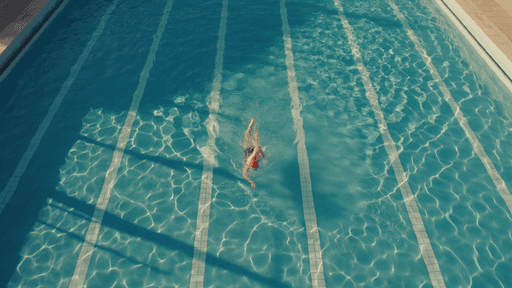
Salt started as a location scout on a February morning in Palm Springs: an emptied pool, white paint, the kind of light that makes everything look like a postcard of itself. Lido Swim wanted a summer that felt remembered rather than staged. We shot the pool and the water for real, on 35mm, and grew the swimmers in the edit.
Three sources, one look
That meant three kinds of picture had to sit in one frame: scanned film negative, digital plates of the water, and generated figures. Each has its own idea of black, its own grain and its own way of rolling off the highlights. Left alone, the swimmers looked pasted on, too clean and a little too sure of themselves.
So we graded backwards. Before a single swimmer existed, we built the look on the film scans and locked it: a warm, slightly lifted black, cyan pushed into the shadows of the water, skin held close to the stock. Every generated pass was then rendered into that look instead of being corrected towards it afterwards.
We never graded a swimmer. We graded the pool, and taught the swimmers to live in it.
Grain is a contract
The last ten percent was grain. Generated figures have none, so we scanned a roll of unexposed 5219, pulled the grain off it and laid it over the whole frame, swimmers and all, at the same size and the same speed. Once everything shared the same noise, the eye stopped looking for the seams.

The finished spot runs thirty seconds. It took four days to shoot, nine to grow and two to grade, and the client's first note was about the colour of the tiles, which is the best note a grade can get.
More dailies
All dailies


Roll camera.
Tell us about the film. We reply within one working day.
Dailies
One letter a month. Mostly stills.
Apricot